The full version in 167min long! This edited version hits all the main issues and frankly I think the full version is rather bloated… IMHO.
https://www.youtube.com/watch?v=OJuqoDvyXOk&list=PLB378CA124AC8F49E&bpctr=1373493208


Florida justice is color-blind: if you’re black and fire warning shots in self defense you get 20 years >:/
Posted: 2013/07/10 by Punkonomics (@dearbalak) in UncategorizedTags: black, Castle doctrine, Florida, Ishmael Reed, Juice, justice, law, OJ Simpson, race, racism, Sanford Florida, stand your ground
http://www.cbsnews.com/8301-201_162-57433184/fla-mom-gets-20-years-for-firing-warning-shots/
At the end of our last show, we made a few comments on the importance of context (historical, social, economic, legal, etc) in understanding the rapidly deteriorating state of our society in general and “race-relations” in particular.
In Show#40 I also mentioned a great book that attacks the issue from an opposite side in an inimitable way and I highly recommend it especially for whites.
I owe Jay Gordon for introducing me to the writing of Ishmael Reed with his novel: JUICE (2011)

Share this:

Is Peter Pan feminist? (check out my deconstruction!)
Posted: 2013/07/10 by Punkonomics (@dearbalak) in UncategorizedCheck out my feminist deconstruction of Peter Pan on my wife’s show.

Anita Sarkeesian explains Tropes vs. Women = reoccurring themes and representations of women in Hollywood films and TV shows.
In this case, “The Manic Pixie Dream Girl” is a cute, bubbly, young (usually white) woman who has recently entered the life of our brooding hero to teach him how to loosen up and enjoy life. While that might sound all well and good for the man, this trope leaves women as simply there to support the star on his journey of self discovery with no real life of her own.
But in Peter Pan it’s an inverse where Peter is the Manic Pixie Dream BOY who helps Wendy growing up and becoming a Women.
… see how I did a textbook deconstruction here ;)
Share this:

Show #40: George Ciccariello-Maher on the people’s history of the Venezuelan revolution
Posted: 2013/07/09 by Punkonomics (@dearbalak) in PodcastsTags: Bolivarian revolution, George Ciccariello-Maher, George Santayana, Hugo Chavez, Latin America, Nicolás Maduro, People's history, political theory, radical, Venezuela, Venezuelan Revolution
George Ciccariello-Maher is the author of We Created Chávez: A People’s History of the Venezuelan Revolution (2013)
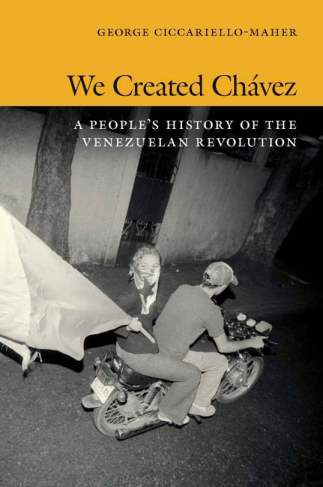
There’s a complete bio on my prior post announcing the show here, and more info as well as a wealth of other writing on George’s website.
Directly below is an outline of the main questions we asked in the interview but you’ll have to listen to the podcast for his fascinating answers. And then you should read the book too. We hope very much to have the opportunity to talk to him again about the developments in this dynamic and part of the world. At a time when most of the globe is going from bad to worse, the Bolivarian republics of Latin America seem to be a beacon of hope–not perfect but showing clear measurable improvement in the standard of living of the majority of their population. This is more than almost all other countries can say for themselves…
Question outline:
> We had a show defending Chavez’s political and economic record right after he died in March
> You have a special point of view:
>> You see Chavez as a chapter in a larger story
>> The book displaces the debate from the man himself to looking at the Venezuelan people instead of their leaders: A people’s history like Howard Zinn‘s A people’s History of the US.
> Where did your personal interest come from?
> Book starts from fall of dictatorship in 58 and the beginning of “democracy” Why?
> Chavez is not the focus: What then IS his contribution/importance?
> Is Venezuela special in S. America? in the world? How so?
> Jesse Velez asked about the recent developments now that Chavez is dead?
> Explain the structure of the opposition to Chavez and now Maduro:
>> from the radical left
>> from the right
>> how did they get so many votes in the last election?
> Any lessons for the US in all this?
- Foreign policy (vis-a-vis global people’s movements)
- Domestic: horizontal/vertical reforms
- #occupy?
> Jesse Velez asked about popular movements in his native Puerto Rico.
> Finally: On a different local issue we touched upon the Zimmerman trial and the critical importance of understanding the historical context behind such divisive painful issues in order to develop empathy which is what makes us human.

 Punkonomics (@DearBalak)