An anarchistic, scholarly, and entertaining podcast and blog with punk-pop-economist-at-large Dr. Beni Balak and Co-Host Jesse Velez: Get tuned in, turned on, and drop out of ignorance!
We had a lively argument with some of my students in the studio about current US foreign policy in its economic and historical context. Despite having some fundamental disagreements it was a real pleasure and reminded me why I chose to teach in a liberal arts college!
They were Michael Brunelli, Andrew Basye, and Timur Jabiev.
We had a lively argument with some of my students in the studio about current US foreign policy in its economic and historical context. Despite having some fundamental disagreements it was a real pleasure and reminded me why I chose to teach in a liberal arts college!
They were Michael Brunelli, Andrew Basye, and Timur Jabiev.
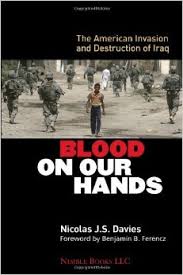
NICOLAS “Sandy” DAVIES joined us again on the phone to discuss hes recent article linking ISIS and the global crisis in US foreign policy to our government’s belligerent and misguided response to the mass murders of September 11th, including 94,000 air strikes, an opportunistic global military expansion and a doubling of the military budget:
I believe this is a critical perspective Punkonomics must address. On a personal level, as a professor teaching economic history, I regularly encounter the problem of having to teach the ugly truth to students who have no clue about their history and thus are, as the saying goes, condemned to repeat it. This shit keeps me up at night–literally :(
Select previous interviews and articles by Nicolas J.S. Davies:
It’s not so much about oil as such but about flows of investment funds…
After the Arab Spring movements overturned the rulers of Tunisia and Egypt, Libya experienced a full-scale revolt beginning on 17 February 2011. The civil war resulted in the ousting and death of the country’s despotic dictator Muammar Gaddafi, and the collapse of his 42-year long tyranny. The liberation of Libya was celebrated on 23 October 2011.
At least 30,000 Libyans died in the civil war. No doubt all those who sacrificed their lives for the liberation of their homeland dreamed of a better future for their children and countrymen. They hoped a day would come when Libya would prosper and thrive. But that day will not come soon. It is estimated that it would take at least 10 years merely to rebuild Libya’s infrastructure. Even before the 2011 war, Libya’s infrastructure was in a poor state due to “utter neglect” by Gaddafi’s administration. Yet Libya has a new obstacle to overcome; its assets have been stolen and the country has no wealth to build its future on.
This is the story of how Libya, a once wealthy African nation with its vast reserves of oil is now down on its knees and its wealth being stolen by Western Powers now. This has only added insult to the injury of decades of Gaddafi’s dictatorship.




 Punkonomics (@DearBalak)